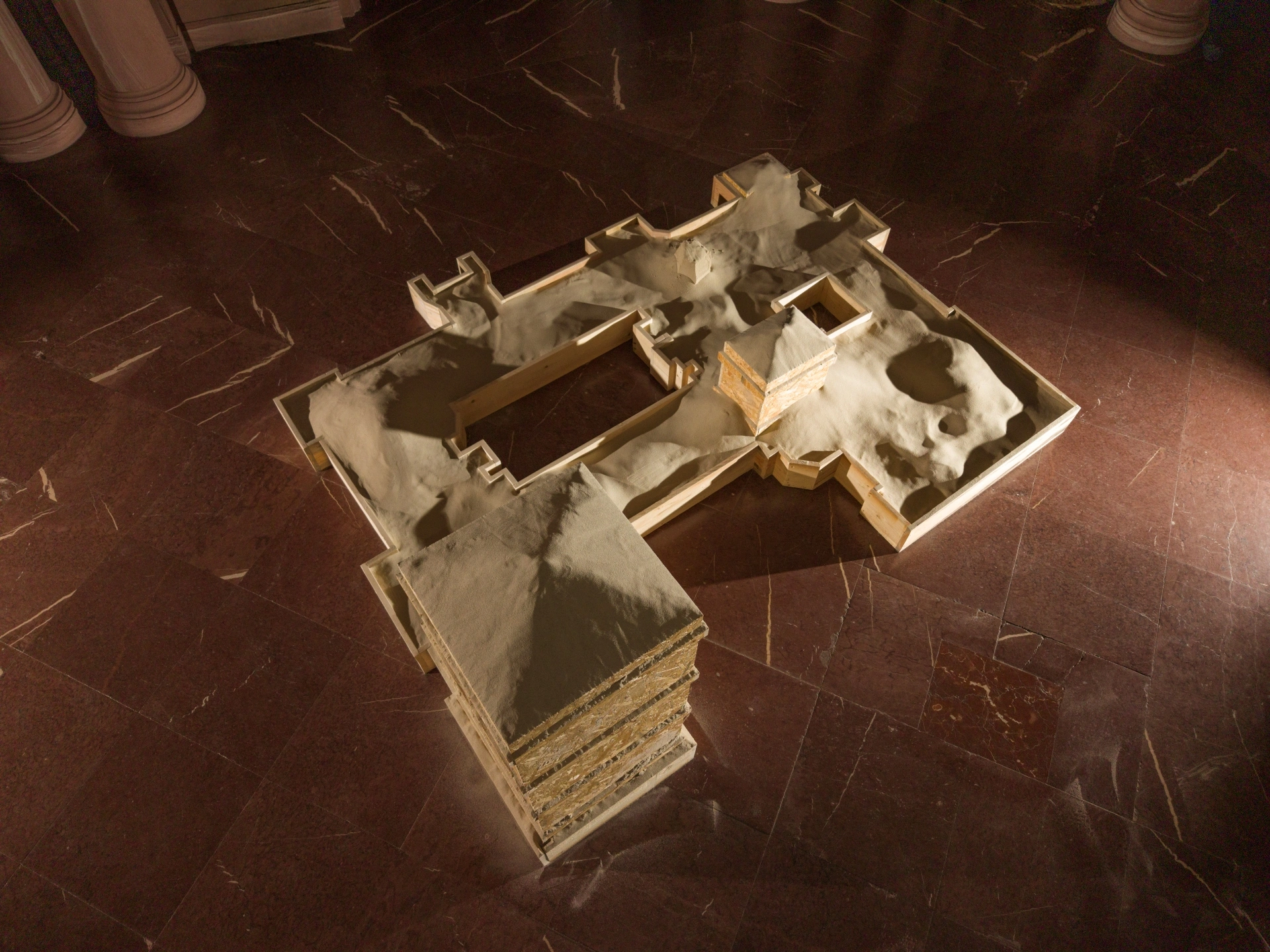
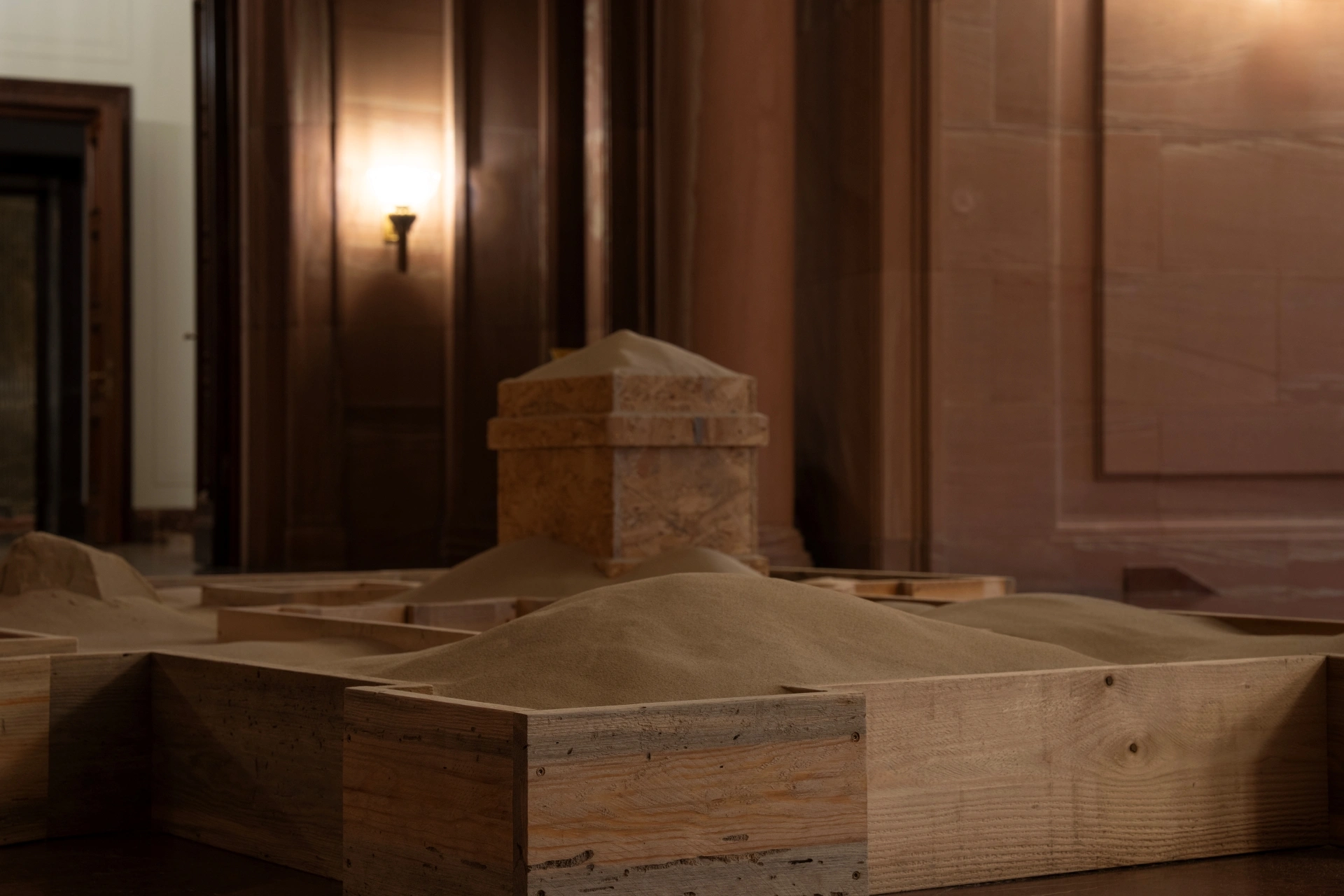
Entropy-Neg-Entropy, 2025
Installation, dimension approx. 3,5×4,0 m
Group exhibition DRWAL (woodcutter), CK Zamek, Poznań, Poland
Curator – Przemysław Jędrowski
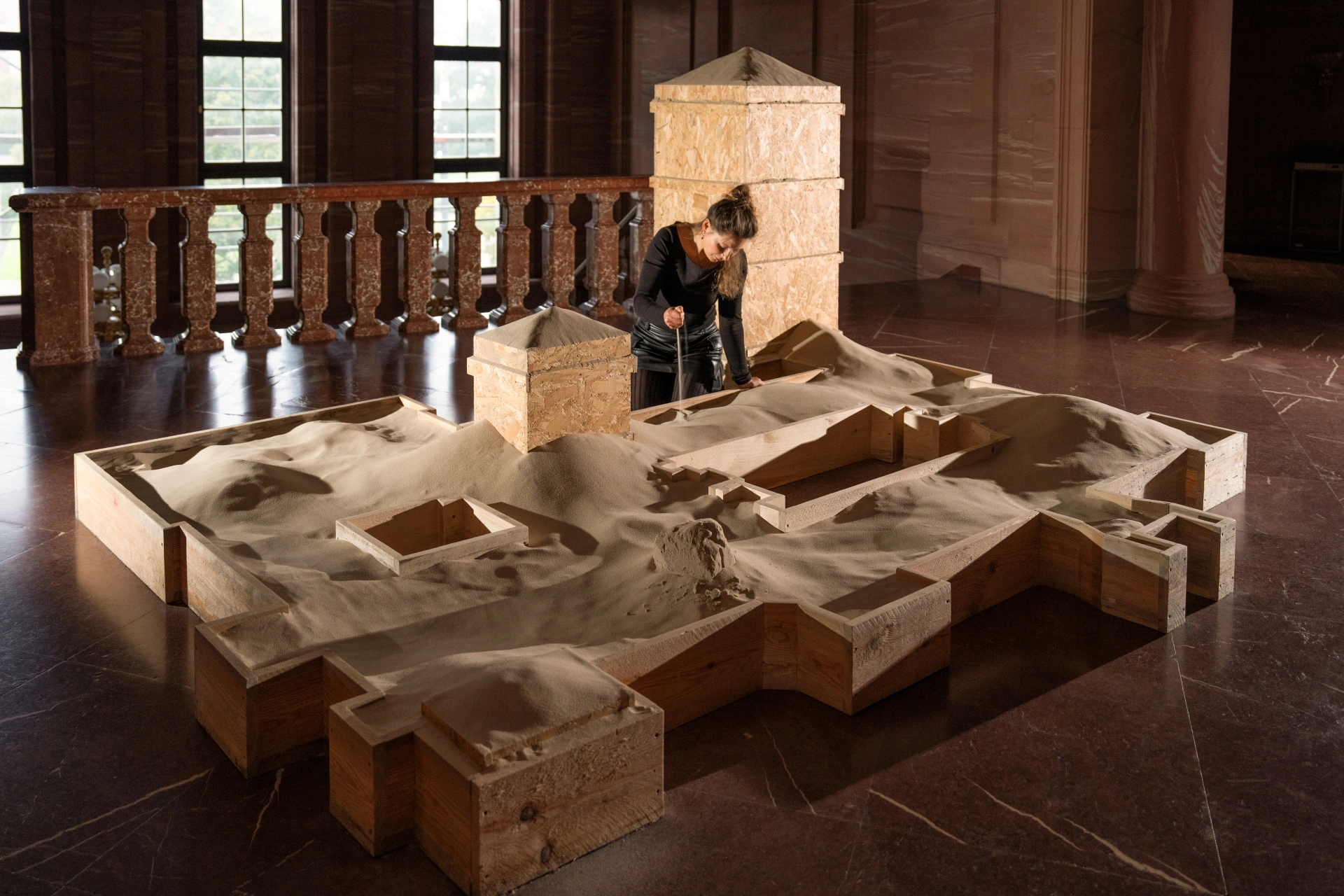
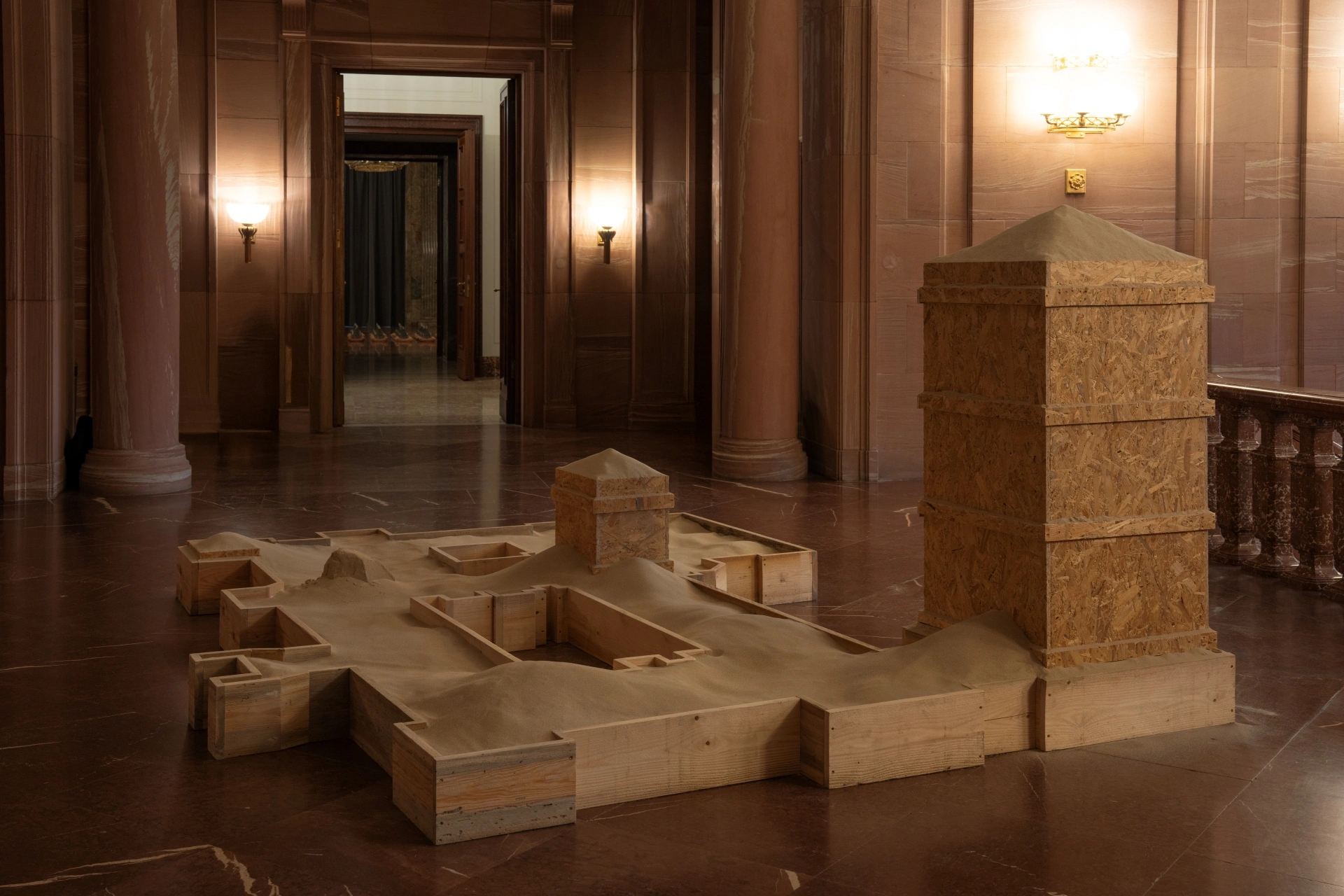
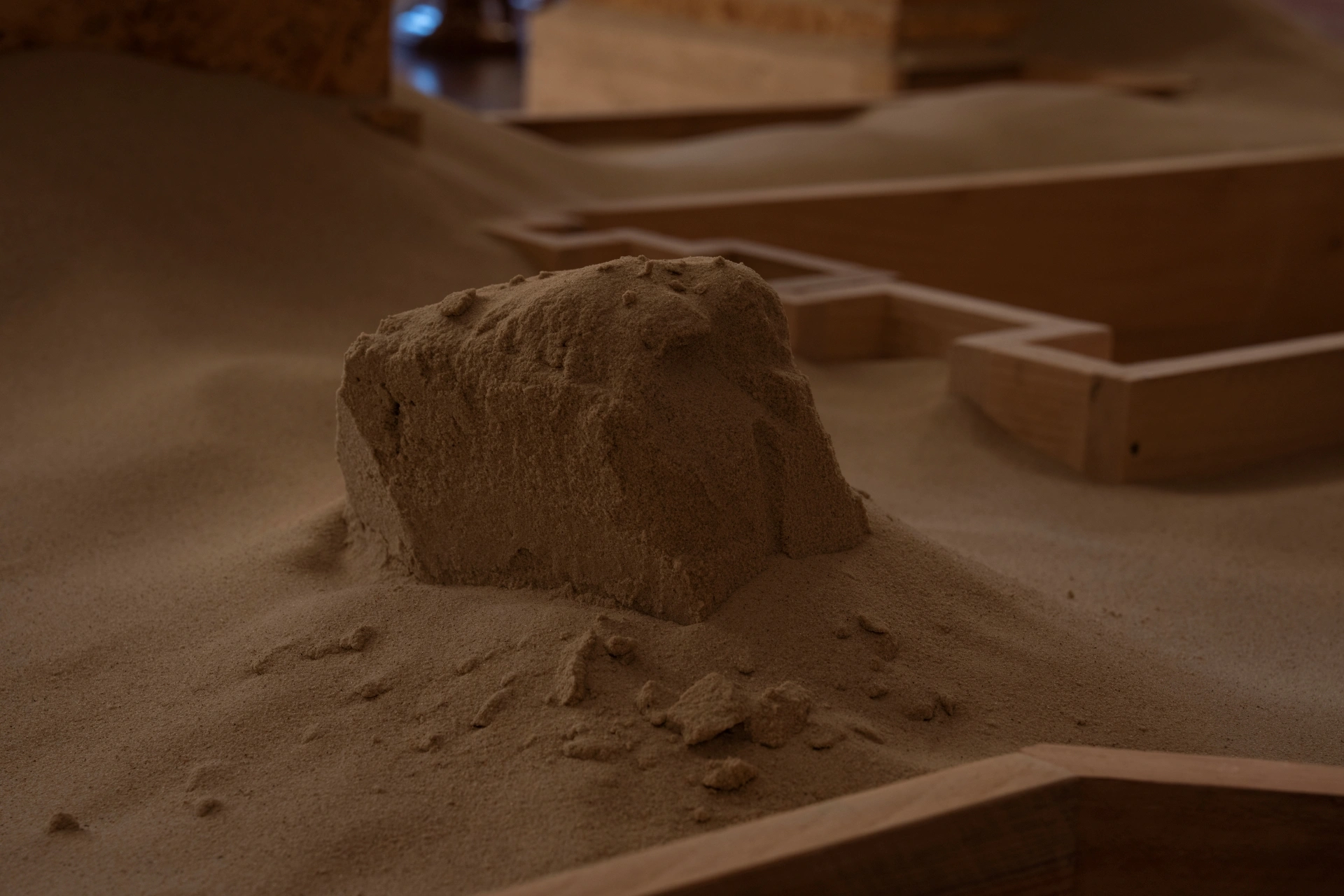
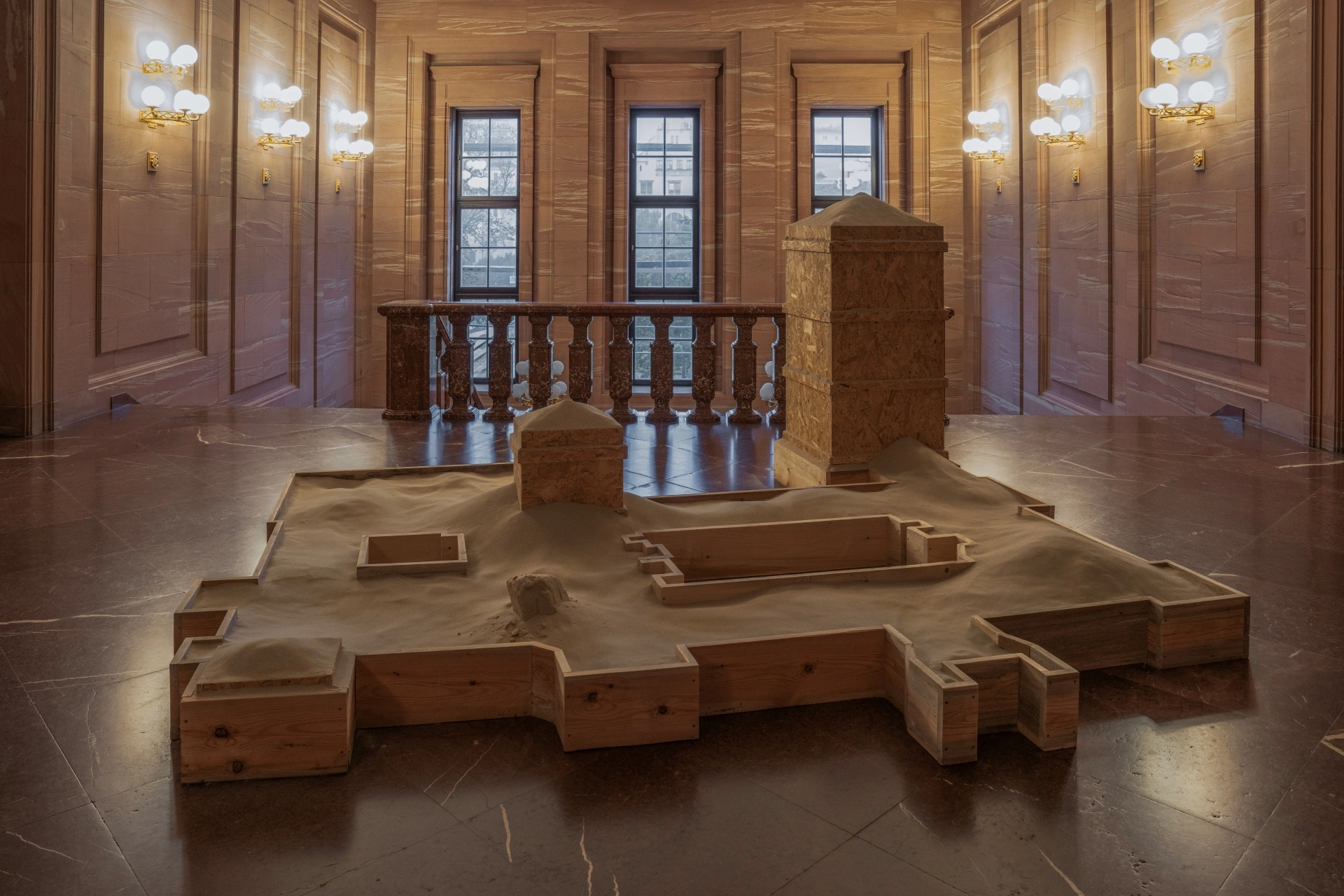
“Entropy-Neg-Entropy installation is a reflection on the transformation of social ideas and the roles of architecture. In it, Sonia Rammer juxtaposes the symbolic beginning of the Castle with the “ruins” she has created and visualizes its post-historical future. Formally, the artist refers to the outline of the foundations of the former Imperial Castle in Poznań. She reproduces it to scale, juxtaposing a wooden structure—reminiscent of construction formwork—with the function of a sandbox. The collapse of the structure is a creative process, the beginning of a new reality in which the original message of the building, based on militaristic myths and power over space, gives way to functions far removed from ideology.
There is also a clear allusion to the “castles in the sand” built by states, organizations, societies, and individuals such as Emperor Wilhelm II. For the artist, ruins are a space in which organized masculinity and its domination are transformed into something open to diversity and change. Rammer literally and figuratively plays in someone else’s sandbox.”
Przemysław Jędrowski (transl. Sonia Rammer)
The exhibition is accompanied by the DRWAL (woodcutter) audio library.
https://open.spotify.com/episode/2YumBuAavh1jX8uYG0Ze9H?si=4ce286326e654a0a
photo: Zachar Szerstobitow
Entropia-Neg-Entropia, 2025
“Instalacja Entropia-Neg-Entropia jest refleksją nad przeobrażeniem się społecznych idei i ról architektury. Sonia Rammer zestawia w niej symboliczny początek Zamku z “ruinami”, które stworzyła i wizualizuje jego post-historyczną przyszłość. Formalnie artystka odnosi się do obrysu fundamentów dawnego Zamku Cesarskiego w Poznaniu. Odwzorowuje go w skali, zestawiając drewnianą konstrukcję – nawiązującą do budowlanych szalunków – z funkcją piaskownicy. Rozpad konstrukcji jest tu procesem twórczym, początkiem nowej rzeczywistości, w której pierwotne przesłanie budowli opartej na militarystycznych mitologiach i władzy nad przestrzenią, ustępuje miejsca dalekim od ideologii funkcjom.
Czytelna jest także aluzja do “zamków na piasku” budowanych przez państwa, organizacje, społeczeństwa i jednostki, takie jak cesarz Wilhelm II. Ruiny są dla artystki przestrzenią, w której zorganizowana męskość i jej dominacja, przekształca się w coś otwartego na różnorodność i zmiany. Rammer dosłownie i w przenośni bawi się w “cudzej” piaskownicy.”
Przemysław Jędrowski
Wystawie towarzyszy fonoteka DRWAL. Historie o męskości.
https://open.spotify.com/episode/2YumBuAavh1jX8uYG0Ze9H?si=4ce286326e654a0a
foto: Zachar Szerstobitow